|
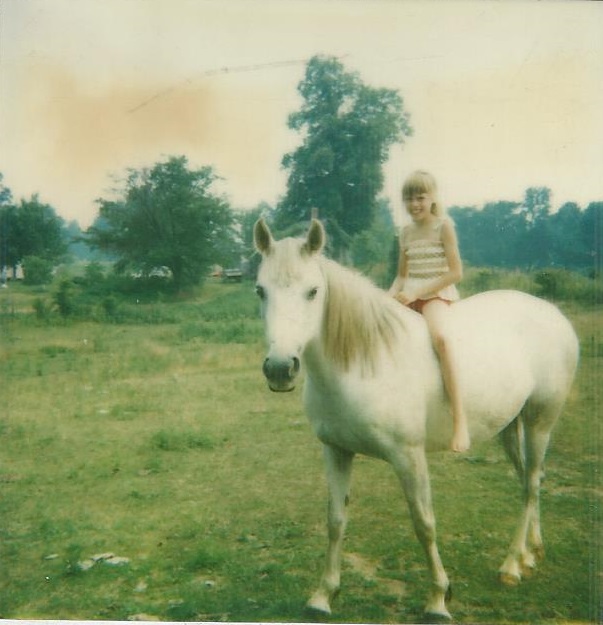
| Photo provided by author Joanne Lewis |
 |
| Photo provided courtesy of Joanne Lewis |
Ann: Hi Joanne! Welcome to my blog. Your novel, The Lantern revolves around two main themes, redemption and the necessity for artistic expression. What made you decide to have your contemporary character Filippa’s story be one that focused on redemption as she tries to solve the mystery of the ‘renaissance girl’?
Joanne: Hi, Ann. Thank you so much for inviting me to your blog. What a great first question. Whether I am writing murder mysteries or historical novels, I like to have themes running through my books. I decided to have Filippa’s story, which takes place in the modern day, be the focus since I thought the readers might best relate to her. Dolce’s life in The Lantern spans from when she is a little girl until she is an old woman. Since Filippa is a modern day heroine, complete with major chinks in her armor, I felt the reader would best feel compassion and hope for Dolce if they saw her through Filippa’s eyes. Redemption and freedom of artistic expression are the themes of The Lantern, for sure.
Ann: They are lovely themes to explore and you do a terrific job of it. As you just mentioned, your other character, Dolce’s story takes place in the past, during the Italian Renaissance. What drew you to want to write about this particular time period? And how did you decide to focus your mystery around the girl who entered the competition to build the lantern a top Brunelleschi’s dome when there are so many mysteries during this period in history you could have written about?
Joanne: I have to admit that I am obsessed with the Italian Renaissance. I have no idea why I am transfixed by this time period. I must have over 100 books on the topic about artists who lived during the Renaissance, to their artwork, to the invention of the printing press, the Medici, Savonarola and on and on and on. Before beginning The Lantern, I knew I wanted the book to involve that time period.
I was looking around for what story I would write while I was reading Ross King’s Brunelleschi’s Dome. When I read the line: “even a girl from the Gaddi family dared to enter the competition to build the lantern on top of the dome”, I knew I had found my story. I spent the next several months trying to find out who this girl was. I traveled to different locations to research, reached out to experts at universities and read everything I could to find out who she was. I finally found the answer that satisfied me at a local library. The Gaddi girl never existed. This knowledge gave me the freedom to create Dolce.
Ann: Very intriguing. From what you just said it sounds like there is room for some speculation on that particular mystery. I love your fictional resolution of it in the book, but I won’t say anymore or give away too much for those who haven’t read the book.
Many people seem to only focus on the positive aspects of the Italian Renaissance. But you chose not to do this. Were you surprised to discover that this time was rampant with brutality, prejudice, superstition, and disease at the same time so many remarkable achievements were taking place in art, architecture, and even science? Do you feel things have improved in modern times?
Joanne: I read so much about the time period of the Italian Renaissance that I am no longer surprised by the brutality, prejudice and disease. But each time I learn about a piece of art, a discovery made during that time, or a building erected from stone, I am continually amazed. It was such a difficult time to live in yet so many wonderful discoveries were made, many of which hold up today including Brunelleschi’s discovery of perspective and many of Da Vinci’s discoveries. If you look at Michelangelo’s David or the Sistine Chapel, not many works of art surpass them and he did those over five hundred years ago while suffering from gout, having to work with the constant pressure of the Pope and the general atrocities of the time. It makes every discovery from that time period even more remarkable.
I would like to say that things have improved in modern times. We have modern medicine, air conditioning and heat, and the benefit of modern technology. But at the same time, this modern day has its own versions of the plague, its own prejudices and certainly its share of brutality.
Ann: Sad, but very true. I guess those are problems that each generation of humanity must struggle against in its own unique way. Remarkable creatures that we are we never let it completely dampen our achievements or accomplishments.
In addition to being an award winning author, you’re also an attorney who specializes in child advocacy. Did you draw on your own experiences as an attorney to help you create Filippa’s narrative?
Joanne: I did. As a former prosecutor as well as a child advocate, I have dealt with many people who suffer from drug and alcohol addiction. While Filippa found a purpose and changed her life, unfortunately a lot of the people that I run across as an attorney are not as fortunate.
Ann: Why did you want to draw such parallels between the two characters and the struggles they face, when so many historical novels seem to portray our contemporary times as being so much better than the past?
Joanne: I felt it was important for the past and the present to meld into one. In my mind (although this is not reflected in the book), Filippa and Dolce are related. I never did the math to see how; maybe Dolce is Filippa’s great great great (multiply that by 20?) grandmother or aunt. I wanted them to have similar struggles and to overcome adversity as if one was gaining strength from the other across time and space.
Ann: What a fascinating perspective, thanks for sharing it with me. I never even considered Filippa and Dolce as distant relatives.
You’ve chosen to self-publish your novels. What made you choose this route to publication and what advice would you offer to authors who are considering self-publication?
Joanne: I was traditionally published and having a bad experience so I began to research self publishing. I was disappointed since I had worked so hard and so long to be traditionally published and I ended up with an independent press that failed to live up to its promises with me. I got the rights back to this book (Wicked Good) and figured I have been a self employed attorney for over 15 years, why can’t I be a self employed published author? I thought a lot about that and really dug deep to figure out what was stopping me on an emotional level. I realized it was like being back in the schoolyard and wanting to be accepted by the other kids. I knew being accepted by the publishing industry and other authors wasn’t what was important to me if they were going to judge me. I just wanted to be accepted by my readers. When I self published, I learned a very valuable lesson. Readers do not care how an author is published, just that a book is worthy of their time.
As I said, I have been a self employed attorney for fifteen years and have four self published books, and another one coming out soon. I am very pleased with this decision. The good part is that I own all the rights to my books and I control everything about them including where I sell them, how much I charge, the discount I offer to bookstores, my editor, the artwork, and so forth. The negative part is that it is still hard for self published authors to get their books into brick and mortar bookstores. I am always surprised when I find out one of my books is in a local Barnes & Noble. I am never sure how they got there but I am always thrilled.
For someone who is considering self-publishing, I would say go for it but only after you have written the best book that you can and after you have had it professionally edited. I have a lot more advice to give but it would take up all of this blog post and many more! If anyone wants to ask me any questions about self-publishing, I'd be happy to answer them. Just send me an e-mail at jtawnylewis@gmail.com.
Ann: Did you have a target audience in mind to market to before self-publishing your books?
Joanne: I write murder mysteries and historical novels with no specific target audience in mind. However, since my books generally feature strong female protagonists I imagine women are mostly attracted to read my books. I think this is going to change with the next books I will be publishing. They are a five part series of novellas featuring Michelangelo from when he was seventeen years old (Michelangelo & the Morgue, book 1 of the series) to the present day (Michelangelo & Me, book 5 of the series). I call this genre historical fantasy. The target audience is everyone. I think it will appeal to men and women, adults and mature young adults.
Ann: Thank you so much for being a guest on my blog, today, Joanne. What new books do you anticipate coming out soon?
Joanne: As I mentioned, I will soon be publishing book one of the Michelangelo & Me series, called Michelangelo & the Morgue.
Joanne: Hi, Ann. Thank you so much for inviting me to your blog. What a great first question. Whether I am writing murder mysteries or historical novels, I like to have themes running through my books. I decided to have Filippa’s story, which takes place in the modern day, be the focus since I thought the readers might best relate to her. Dolce’s life in The Lantern spans from when she is a little girl until she is an old woman. Since Filippa is a modern day heroine, complete with major chinks in her armor, I felt the reader would best feel compassion and hope for Dolce if they saw her through Filippa’s eyes. Redemption and freedom of artistic expression are the themes of The Lantern, for sure.
Ann: They are lovely themes to explore and you do a terrific job of it. As you just mentioned, your other character, Dolce’s story takes place in the past, during the Italian Renaissance. What drew you to want to write about this particular time period? And how did you decide to focus your mystery around the girl who entered the competition to build the lantern a top Brunelleschi’s dome when there are so many mysteries during this period in history you could have written about?
Joanne: I have to admit that I am obsessed with the Italian Renaissance. I have no idea why I am transfixed by this time period. I must have over 100 books on the topic about artists who lived during the Renaissance, to their artwork, to the invention of the printing press, the Medici, Savonarola and on and on and on. Before beginning The Lantern, I knew I wanted the book to involve that time period.
I was looking around for what story I would write while I was reading Ross King’s Brunelleschi’s Dome. When I read the line: “even a girl from the Gaddi family dared to enter the competition to build the lantern on top of the dome”, I knew I had found my story. I spent the next several months trying to find out who this girl was. I traveled to different locations to research, reached out to experts at universities and read everything I could to find out who she was. I finally found the answer that satisfied me at a local library. The Gaddi girl never existed. This knowledge gave me the freedom to create Dolce.
Ann: Very intriguing. From what you just said it sounds like there is room for some speculation on that particular mystery. I love your fictional resolution of it in the book, but I won’t say anymore or give away too much for those who haven’t read the book.
Many people seem to only focus on the positive aspects of the Italian Renaissance. But you chose not to do this. Were you surprised to discover that this time was rampant with brutality, prejudice, superstition, and disease at the same time so many remarkable achievements were taking place in art, architecture, and even science? Do you feel things have improved in modern times?
Joanne: I read so much about the time period of the Italian Renaissance that I am no longer surprised by the brutality, prejudice and disease. But each time I learn about a piece of art, a discovery made during that time, or a building erected from stone, I am continually amazed. It was such a difficult time to live in yet so many wonderful discoveries were made, many of which hold up today including Brunelleschi’s discovery of perspective and many of Da Vinci’s discoveries. If you look at Michelangelo’s David or the Sistine Chapel, not many works of art surpass them and he did those over five hundred years ago while suffering from gout, having to work with the constant pressure of the Pope and the general atrocities of the time. It makes every discovery from that time period even more remarkable.
I would like to say that things have improved in modern times. We have modern medicine, air conditioning and heat, and the benefit of modern technology. But at the same time, this modern day has its own versions of the plague, its own prejudices and certainly its share of brutality.
Ann: Sad, but very true. I guess those are problems that each generation of humanity must struggle against in its own unique way. Remarkable creatures that we are we never let it completely dampen our achievements or accomplishments.
In addition to being an award winning author, you’re also an attorney who specializes in child advocacy. Did you draw on your own experiences as an attorney to help you create Filippa’s narrative?
Joanne: I did. As a former prosecutor as well as a child advocate, I have dealt with many people who suffer from drug and alcohol addiction. While Filippa found a purpose and changed her life, unfortunately a lot of the people that I run across as an attorney are not as fortunate.
Ann: Why did you want to draw such parallels between the two characters and the struggles they face, when so many historical novels seem to portray our contemporary times as being so much better than the past?
Joanne: I felt it was important for the past and the present to meld into one. In my mind (although this is not reflected in the book), Filippa and Dolce are related. I never did the math to see how; maybe Dolce is Filippa’s great great great (multiply that by 20?) grandmother or aunt. I wanted them to have similar struggles and to overcome adversity as if one was gaining strength from the other across time and space.
Ann: What a fascinating perspective, thanks for sharing it with me. I never even considered Filippa and Dolce as distant relatives.
You’ve chosen to self-publish your novels. What made you choose this route to publication and what advice would you offer to authors who are considering self-publication?
Joanne: I was traditionally published and having a bad experience so I began to research self publishing. I was disappointed since I had worked so hard and so long to be traditionally published and I ended up with an independent press that failed to live up to its promises with me. I got the rights back to this book (Wicked Good) and figured I have been a self employed attorney for over 15 years, why can’t I be a self employed published author? I thought a lot about that and really dug deep to figure out what was stopping me on an emotional level. I realized it was like being back in the schoolyard and wanting to be accepted by the other kids. I knew being accepted by the publishing industry and other authors wasn’t what was important to me if they were going to judge me. I just wanted to be accepted by my readers. When I self published, I learned a very valuable lesson. Readers do not care how an author is published, just that a book is worthy of their time.
As I said, I have been a self employed attorney for fifteen years and have four self published books, and another one coming out soon. I am very pleased with this decision. The good part is that I own all the rights to my books and I control everything about them including where I sell them, how much I charge, the discount I offer to bookstores, my editor, the artwork, and so forth. The negative part is that it is still hard for self published authors to get their books into brick and mortar bookstores. I am always surprised when I find out one of my books is in a local Barnes & Noble. I am never sure how they got there but I am always thrilled.
For someone who is considering self-publishing, I would say go for it but only after you have written the best book that you can and after you have had it professionally edited. I have a lot more advice to give but it would take up all of this blog post and many more! If anyone wants to ask me any questions about self-publishing, I'd be happy to answer them. Just send me an e-mail at jtawnylewis@gmail.com.
Ann: Did you have a target audience in mind to market to before self-publishing your books?
Joanne: I write murder mysteries and historical novels with no specific target audience in mind. However, since my books generally feature strong female protagonists I imagine women are mostly attracted to read my books. I think this is going to change with the next books I will be publishing. They are a five part series of novellas featuring Michelangelo from when he was seventeen years old (Michelangelo & the Morgue, book 1 of the series) to the present day (Michelangelo & Me, book 5 of the series). I call this genre historical fantasy. The target audience is everyone. I think it will appeal to men and women, adults and mature young adults.
Ann: Thank you so much for being a guest on my blog, today, Joanne. What new books do you anticipate coming out soon?
Joanne: As I mentioned, I will soon be publishing book one of the Michelangelo & Me series, called Michelangelo & the Morgue.
 |
| Photo provided courtesy of Joanne Lewis |
Michelangelo & the Morgue features a seventeen-year-old Michelangelo who finds himself in the position of being a reluctant detective when artists are being murdered in Florence in the fifteenth century. I expect to have book two, called Sleeping Cupid, out in the beginning of 2014, as well as the follow up to Forbidden Room (tentatively titled Shattered Room) in the fall of 2014. My goal is to publish one historical novel and one murder mystery each year. I will not sacrifice quality so I am unsure if I can achieve this goal. Either way, I will have fun trying.
Thank you, Ann. You asked some great, tough and thoughtful questions. I appreciate that very much.
If you would like to find out more about Joanne and her books please check out her website at http://www.joannelewiswrites.com. To purchase The Lantern: A Renaissance Mystery or any of Joanne’s other novels click on these links for Amazon and Barnes and Noble.